Rumination: The Battle Before the Battle
Rumination is more than overthinking. It is the battle before the battle — the inner dialogue that can be shaped by unresolved trauma, keep us stuck in a reactive state, and place us at a disadvantage before life’s visible struggles even begin.
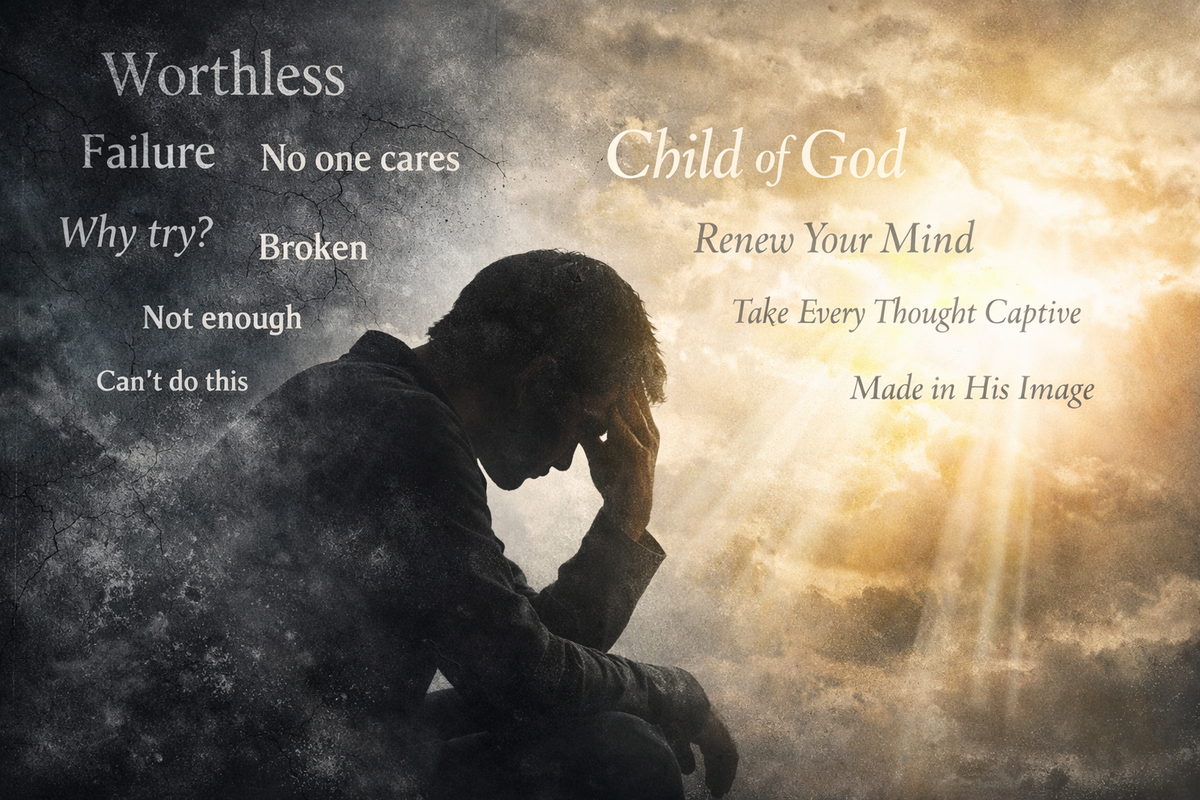
Understanding the Inner Dialogue
Most people do not even know there is a word for the mental loop they live trapped inside.
They just know what it feels like, the replay, the overthinking, the self-criticism, the fear, the shame, the nonstop inner conversation that drags them back into the same emotional space again and again.
We call this rumination, but for most people it does not feel like a clinical term. It feels like being trapped in your own head.
And at its darkest, that inner dialogue turns brutal.
· You are worthless.
· You are nothing.
· You are a failure.
· You always mess everything up.
· Nobody really cares.
· You are too far gone.
· You would be better off dead.
That is not harmless stress.
That is not normal overthinking.
That is a dangerous inner conversation.
And if it goes unchecked long enough, it becomes the kind of ground where deeper mental and emotional battles begin to grow.
The Battle Before the Battle
The more I think about it, the more convinced I am that this is the battle before the battle.
Long before life visibly falls apart on the outside, something is already happening on the inside.
Before pressure shows up, the inner dialogue has already been shaping the lens.
Before the crisis becomes obvious, the mental conversation has already been wearing a person down.
Before the visible fight begins, the position has already been compromised.
That compromised position matters.
It can look like being emotionally exhausted before the day even begins.
It can look like being defensive before anyone has attacked you.
It can look like already bracing for impact, already expecting the worst, already reacting before anything has even happened.
A lot of people think the battle begins when the crisis hits.
I do not think that is true.
By the time life breaks open externally, the internal world has often been under pressure for a long time.
That is why this matters so much.
Many people are not stepping into the visible battle from peace.
They are stepping into it already drained, already stirred up, and already carrying the weight of an inner war that has been running under the surface.
When the Inner Dialogue Turns Dark
We have to be honest, the inner dialogue can turn dark fast.
It may start with replaying a moment, but fed long enough,
it becomes accusation. Condemnation. Hopelessness. Self-hatred.
Once that shift happens, the mind becomes a dangerous place to live.
· You do not just think you failed; you start believing you are a failure.
· You do not just think you made mistakes; you start believing you are worthless.
· You do not just feel pain; you start accepting lies about who you are.
That is why the inner dialogue matters so deeply.
It does not just replay pain.
· It magnifies it.
· Distorts it.
· Normalizes it
until it starts sounding like truth.
And if somebody lives under that kind of internal conversation long enough, it makes perfect sense that anxiety, depression, hopelessness, and deeper mental health struggles begin to gain ground there.
Unresolved Trauma and the Inner Voice
Dark inner dialogue rarely begins as darkness. A lot of times, it begins as a wound that never healed correctly.
What people call overthinking is often unresolved pain still talking.
What looks like a weak mindset is often an old wound that was never properly processed.
What sounds like self-hatred may be long-buried trauma finally finding its voice.
· Fear can keep talking long after the event is over.
· Shame can keep talking long after the event is over.
· Self-blame can keep talking long after the event is over.
So even when life moves on externally, people can still live under the language their trauma created internally.
That is part of why our harmful inner dialog can be so hard to break.
Sometimes it is not just a thought problem.
Sometimes it is a wound that keeps finding its way back into the inner dialogue.
And if unresolved trauma becomes the breeding ground for that conversation, then that conversation can become the breeding ground for deeper mental and emotional struggles.
How the Inner Dialogue Becomes the Lens
The way we speak to ourselves becomes the way we interpret everything else.
If the inner dialogue constantly feeds fear, shame, worthlessness, or hopelessness, the mind eventually starts using those themes as a filter.
· You start reading situations through fear.
· You hear correction through shame.
· You expect rejection before anyone has rejected you.
· You assume failure before anything even happens.
Once the inner dialogue becomes the lens, it does not just shape thoughts.
· It shapes posture.
· It shapes expectations.
· It shapes how you enter the next moment.
That is why this is so dangerous.
A person can be looking at life through accusation, fear, and pain before the next battle even begins.
The Nervous System and the Inner Conversation
This is where the nervous system comes in.
If the inner dialogue constantly threatens, accuses, condemns, or keeps a person on alert, then the body struggles to settle. It stays stirred up. Guarded. Reactive. Tense.
That is a sympathetic-dominant state, fight, flight, or freeze.
And when somebody lives there long enough, logic gets blurry.
Discernment gets muddy.
Clear thinking gets drowned out by urgency.
Peace gets buried under internal chaos.
The system starts reacting faster than it can reason.
So long before the external pressure arrives, the internal system is already bracing for impact.
That is part of why these patterns are so difficult to break.
· The wound fuels the language.
· The language fuels the reaction.
· The reaction reinforces the lens.
· And the lens keeps feeding the same inner conversation.
Why Peace Becomes Hard to Hear
When the inner world is loud, peace becomes hard to notice.
It is not that peace is absent.
It is not that God is silent.
It is that everything else is screaming.
If the inner dialogue constantly says you are worthless, failing, or too far gone, then hope gets buried.
Truth gets buried.
Peace gets buried.
When the internal world is full of noise, accusation, fear, and replay, it becomes harder to slow down enough to receive what is true.
Harder to hear clearly. Harder to discern clearly.
Harder to hear what God may be trying to say.
It is not that He stopped speaking.
It is that the inner chaos got louder than our ability to receive.
Why This Matters
If the inner dialogue is already dark and reactive, then when life hits hard, you are not stepping into the battle from strength.
You are already compromised.
That is why winning the inner battle matters.
Not by forcing positivity, but by refusing to agree with lies and replacing them with truth.
Not shallow optimism. Real truth.
· We are made in His image.
· We are children of God.
· We are not defined by our worst day.
· We are not defined by our deepest wound.
And if that is true, then we cannot keep agreeing with language that strips us of value.
This is where Scripture becomes instruction.
· Take every thought captive.
· Renew the mind.
· Bring the inner world back into alignment with what is true.
Because if we do not replace the unhealthy dialogue, we will return to it.
The goal is not just to stop talking bad to ourselves.
The goal is to stop agreeing with lies and start speaking from truth.
Life will bring pressure.
The world will bring pain.
There will be battles.
But if the inner world is unstable or shaped by fear, shame, and trauma, those battles will always hit harder.
This is why the inner dialogue matters.
Because if we do not win this battle first, by refusing lies and replacing them with truth, we enter every other battle already at a disadvantage.