Parasympathetic, When the System Finally Settles
Parasympathetic peace isn’t passive—it’s how your body responds when you stop bracing and start trusting God with the outcome.
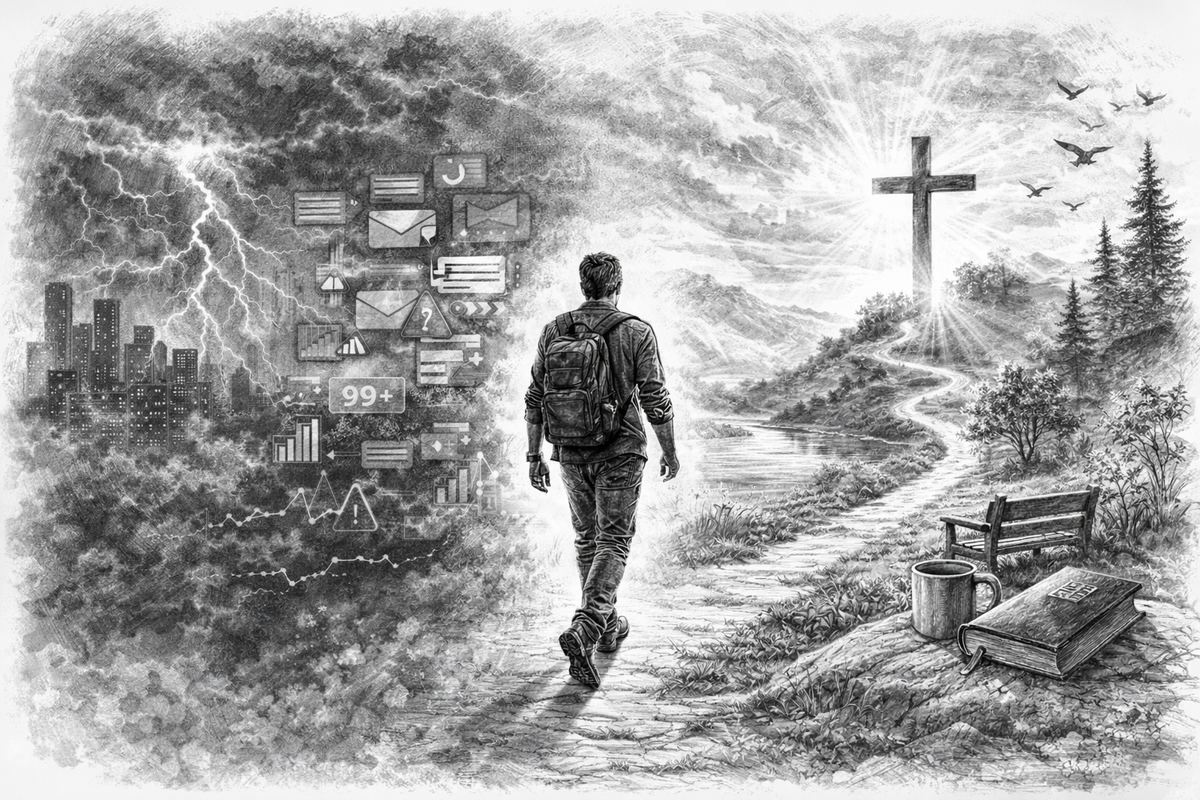
What Changes When You Trust God Is in Control
There’s a kind of peace that doesn’t show up because life suddenly gets easier.
It shows up because you get quieter inside.
Not because the world stops being the world, but because your system finally stops acting like it has to hold the whole thing together.
That’s parasympathetic.
It’s the part of the nervous system most of us don’t realize we’re starving for, not because we don’t want peace, but because we’ve forgotten how to access it.
And I’m not talking about “calm down” language.
I’m talking about something real:
- Your body moving from bracing to settling.
- From scanning to processing.
- From controlling to trusting.
“Be still, and know that I am God.” - Psalm 46:10
That verse isn’t decorative.
It’s an instruction that reaches all the way into your nervous system.
What Parasympathetic Actually Is
Parasympathetic is the body’s restore mode.
It’s the system that:
- slows your heart rate
- deepens your breathing
- allows digestion to return
- helps you sleep and truly recover
- restores emotional regulation
- widens your ability to think clearly
- helps your body process what your mind keeps outrunning
It’s not laziness.
It’s design.
It’s what lets the “data” you’ve been carrying finally get rendered, organized, integrated, and released.
And here’s the connection that changed everything for me:
Trust in God often shows up first as a regulated body.
Because the body follows belief.
- If you believe you’re alone, you brace.
- If you believe it all depends on you, you scan.
- If you believe God is in control, you begin to settle.
“Trust in the LORD with all your heart…” - Proverbs 3:5–6
That’s not just spiritual advice.
That’s nervous-system truth.
A Quick Recap (So We’re Speaking the Same Language)
In the last post, I talked about sympathetic dominance — our “scan mode.”
It’s the system designed for:
- threat detection
- reaction
- mobilization
- staying ready
It’s helpful in true danger.
But the problem comes when it becomes your default, especially in a world of constant input:
email, news, social media, finances, deadlines, pressure, uncertainty.
When the scan never stops, the body never fully processes.
You don’t get restoration, you get accumulation.
And that’s exactly why parasympathetic matters:
No system can scan forever.
At some point, the system has to settle.
What It Felt Like for Me
For a long time, “calm” didn’t feel normal.
Productive felt normal.
Solving felt normal.
Thinking ahead felt normal.
Being needed felt normal.
Stillness felt… weird.
At times, even unsafe.
And I didn’t realize that was my nervous system talking, not my logic.
Because if you’ve lived in scan mode long enough, quiet can feel like you’re missing something.
- Like you should be bracing.
- Checking.
- Doing.
Then one morning, I went for a walk early, no headphones, no input, no noise.
And I noticed something subtle:
- My shoulders weren’t tight.
- My breathing wasn’t shallow.
- My mind wasn’t sprinting.
Nothing around me changed.
But something inside me did.
For the first time in a long time, I felt what it’s like to be present without performing.
Not constant readiness.
But regulated strength.
“I’m in Control” vs. “God Is in Control”
This was a huge turning point for me.
Sympathetic dominance is often fueled by one belief:
“It all depends on me.”
Even if we’d never say that out loud.
It shows up as:
- constant mental rehearsal
- trying to control outcomes
- tracking everything
- bracing for worst-case scenarios
- carrying burdens that were never ours to carry
Parasympathetic engagement begins when that belief shifts:
“I will do my part… but God is in control.”
That’s not passivity.
That’s alignment.
It’s the moment you stop trying to sit in God’s seat.
And here’s what I learned the hard way:
When I try to play God, my nervous system pays the price.
When I return control to God, my body finally exhales.
“Cast all your anxiety on him because he cares for you.” - 1 Peter 5:7
Casting isn’t just a mental exercise.
It’s a physical release.
Why Parasympathetic Can Feel Uncomfortable at First
This part matters, because people quit here.
When your system starts settling, you may feel:
- restless
- emotionally raw
- impatient
- exposed
- like you “should” be doing something
That’s not failure.
That’s withdrawal from constant stimulation.
Your body is learning a new baseline.
And in my experience, this is where the spiritual part gets real:
Stillness reveals what noise was covering.
Not to shame you.
To heal you.
“Heals the brokenhearted and binds up their wounds.” - Psalm 147:3
God never shames wounds.
He heals them.
Practical Ways to Access Parasympathetic Mode
This didn’t happen because I knew the words “sympathetic” and “parasympathetic.”
It happened because I changed my rhythms.
Here’s what actually helped:
Start Your Day Before the World Starts You
Before checking anything, do one of these:
- pray
- read Scripture
- sit outside
- walk
- breathe slowly for 2–3 minutes
- remind yourself, “Today is a gift. Make it a positive day.”
Reduce Inputs on Purpose
If your system is flooded all day, it can’t settle.
Try one boundary:
- no news before noon
- social media only once per day
- notifications off (except calls/texts)
- “email windows” instead of constant checking
Walk Without Stacking Stimulation
No headphones sometimes.
Just you, your breath, God, and creation.
Practice Surrender in Real Time
When you feel that rise in your chest, pause and say:
“I will do my part. God is in control.”
Then exhale slowly.
Reliable, repeated truth retrains the body.
Make Rest a Rhythm Again
- Sabbath
- Sleep.
- Stillness.
Not as a reward. As a practice.
Rest is not weakness. Rest is alignment.
“In returning and rest you shall be saved…” - Isaiah 30:15
What Changes When the System Settles
Life won’t get perfect.
But you get steadier.
You start noticing:
- clearer thinking
- less reactivity
- deeper sleep
- more patience
- better discernment
- more peace in your chest
- more capacity to love people well
You still lead.
You still carry responsibility.
But you don’t have to brace while you do it.
That’s the difference.
It’s the moment your system stops trying to control everything
and starts recognizing life as a series of faith-building seasons —
learning to find comfort in the uncomfortable.
Because growth and change are never easy or painless.
But when you keep God first,
He gives you peace of mind during the faith-building journey.
“Do not be anxious about anything, but in everything by prayer and supplication with thanksgiving let your requests be made known to God.
And the peace of God, which surpasses all understanding, will guard your hearts and your minds in Christ Jesus.” - Philippians 4:6–7