The Mind That Wouldn’t Shut Off
A racing mind can steal your peace and your sleep. Here’s what helped me slow it down, regulate my nervous system, and find steadier ground again
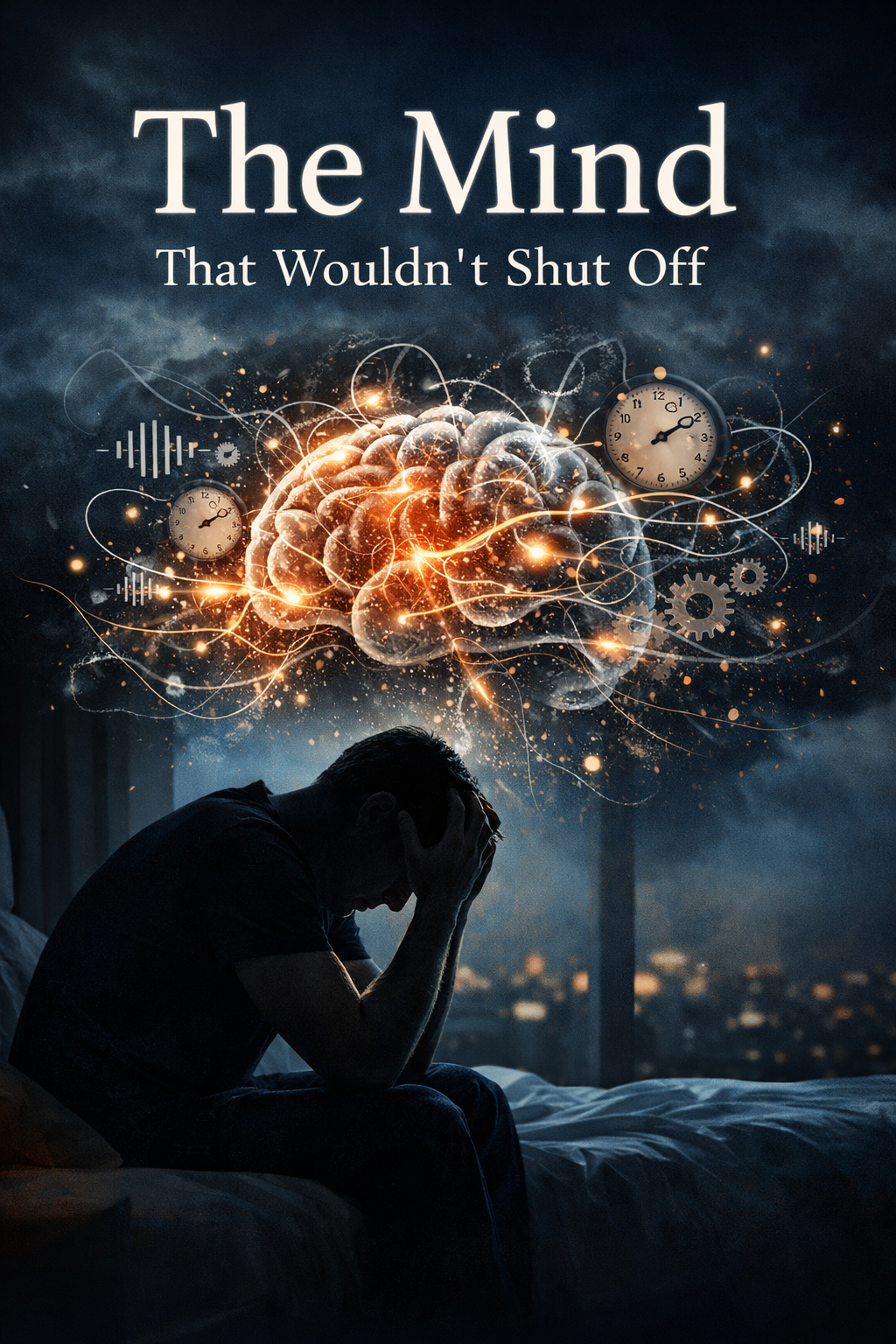
For a long time, I thought my problem was simple.
My mind would not stop.
Even when life was not bad, my thoughts stayed loud. Fast. Relentless. Like a radio I could not turn down. I could be exhausted and still feel wired. I would finally fall asleep, then wake up at 2:00 or 3:00 a.m. and it felt like my brain had been sitting there waiting on me. Ready to jump right back into work.
Planning. Replaying. Predicting. Bracing.
On the outside, I looked high functioning. I could build, lead, produce, handle pressure, and keep moving. But internally I lived on edge. Like something was always about to happen.
I did not know it then, but I was not living in a season of life.
I was living in a state.
A nervous system state.
Back then, I did not have language for what was happening in my body. I just called it me. And I beat myself up for it. That kind of self talk does not build character. It breaks it.
The Labels I Used to Carry
For years, I assumed it was a character flaw. I told myself things like:
I am not disciplined enough.
I am not grateful enough.
I need to work harder.
I should be able to calm down.
Why can’t I relax like other people?
So I tried the usual solutions. More control. More willpower. More productivity. More noise. More stimulation. More push.
None of it worked.
Because none of that fixes a nervous system that is stuck.
The Discovery That Shifted Everything
During these last several years, especially as I have stayed in remission and kept walking the recovery path, I came across something that brought clarity instead of shame.
The sympathetic and parasympathetic nervous systems.
Two basic gears.
Sympathetic is action. Alertness. Survival. Go mode.
Parasympathetic is calm. Restoration. Recovery. Rest mode.
Both matter. Both are good.
But when your system gets stuck in sympathetic dominance, it can feel like this:
Your mind races even when you are tired.
You are hyper aware and hyper vigilant.
Your body cannot fully exhale.
Rest feels unsafe.
You are exhausted but not calm.
You sleep but you do not recover.
You wake up and your thoughts immediately sprint.
That was me.
And it turns out I was not just dealing with thoughts.
I was dealing with a nervous system trained to stay on high alert.
Why This Matters in Remission From Addiction
After seven years on the recovery path, here is something I wish I knew early on.
Sobriety alone does not regulate the nervous system.
You can remove the substance and still live in survival mode. And when your body stays stuck in that mode, it begs for relief. It reaches for whatever used to numb, quiet, or distract.
Alcohol. Scrolling. Work. Chaos. Porn. Gambling. Isolation. Anger. Adrenaline.
Anything that feels like an off switch.
Because the body is not asking a moral question.
It is asking a biological one.
How do I come down from this?
Without a healthy path back into regulation, the system defaults to what it knows.
When Stress Becomes Normal
This hit me hard.
I was not anxious because life was dangerous.
I was anxious because my body had practiced anxiety for so long it became familiar.
That is what survival mode does. It becomes baseline.
You do not even realize you are clenching until you finally feel what it is like to unclench.
The Noise That Keeps Us Activated
One of my biggest breakthroughs was realizing how much noise I lived in.
Noise is not just sound.
Noise is constant stimulation.
Constant urgency.
Constant reacting.
Constant comparison.
Constant consuming.
Constant input with no recovery.
Even good things become noise if your nervous system never gets the signal that it is safe to power down.
And when the system does not power down, sleep becomes fragile. You fall asleep from exhaustion, but your body stays on duty.
That is why you can wake up in the middle of the night and feel like your brain is already dressed for work.
Regulation Is a Skill
This has been one of the most important shifts for me.
Peace is not a personality trait. It is a regulated state.
For me, it is also the posture of your heart.
Regulation is not something you think your way into. It is something you train your body into. Slowly. Over time. With repetition.
Small things matter more than people realize.
Breathing that actually slows the system.
Walking. Rhythmic movement is powerful.
Morning sunlight.
Lowering stimulation at night.
Stepping out of constant urgency.
Supportive relationships where you do not have to perform.
Naming what you feel without judgment.
Choosing inputs that calm instead of spike.
I am not writing this as someone who has arrived.
I am writing as someone who finally understands the road he is on.
Once You See the CNS, You Can’t Unsee It
You start noticing things.
Why you feel fine but still cannot rest.
Why the body holds stress even when the mind says you are okay.
Why sleep gets disrupted even when you are doing everything right.
Why certain environments or people spike you.
Why some forms of productivity are actually stress addiction.
Why you crave intensity when you do not know how to feel regulated.
And you start seeing something hopeful.
If the nervous system can learn survival, it can also learn safety.
It takes time. It takes patience. It takes training. Not shame.
Where Faith Comes In
For me, the deepest form of regulation is not just physical. It is spiritual.
A regulated nervous system is one thing.
A regulated soul is another.
At some point I realized I did not just need better habits. I needed a different posture of heart.
Not clenched.
Not proving.
Not performing.
Not striving.
A posture that could actually receive peace.
That is where my relationship with God changed everything. Not as a slogan. Not as a try harder. As an anchor.
The place where the noise quiets down and I am reminded.
I am not in control.
I am not alone.
I do not have to carry everything.
That is the road I have been walking for seven years. And I am still walking it.
But now, for the first time, I can explain what was happening inside me. And why understanding the nervous system has been one of the biggest breakthroughs of my life.
If this hits home for you, you are not broken. You are patterned. And patterns can be retrained. With faith and action.